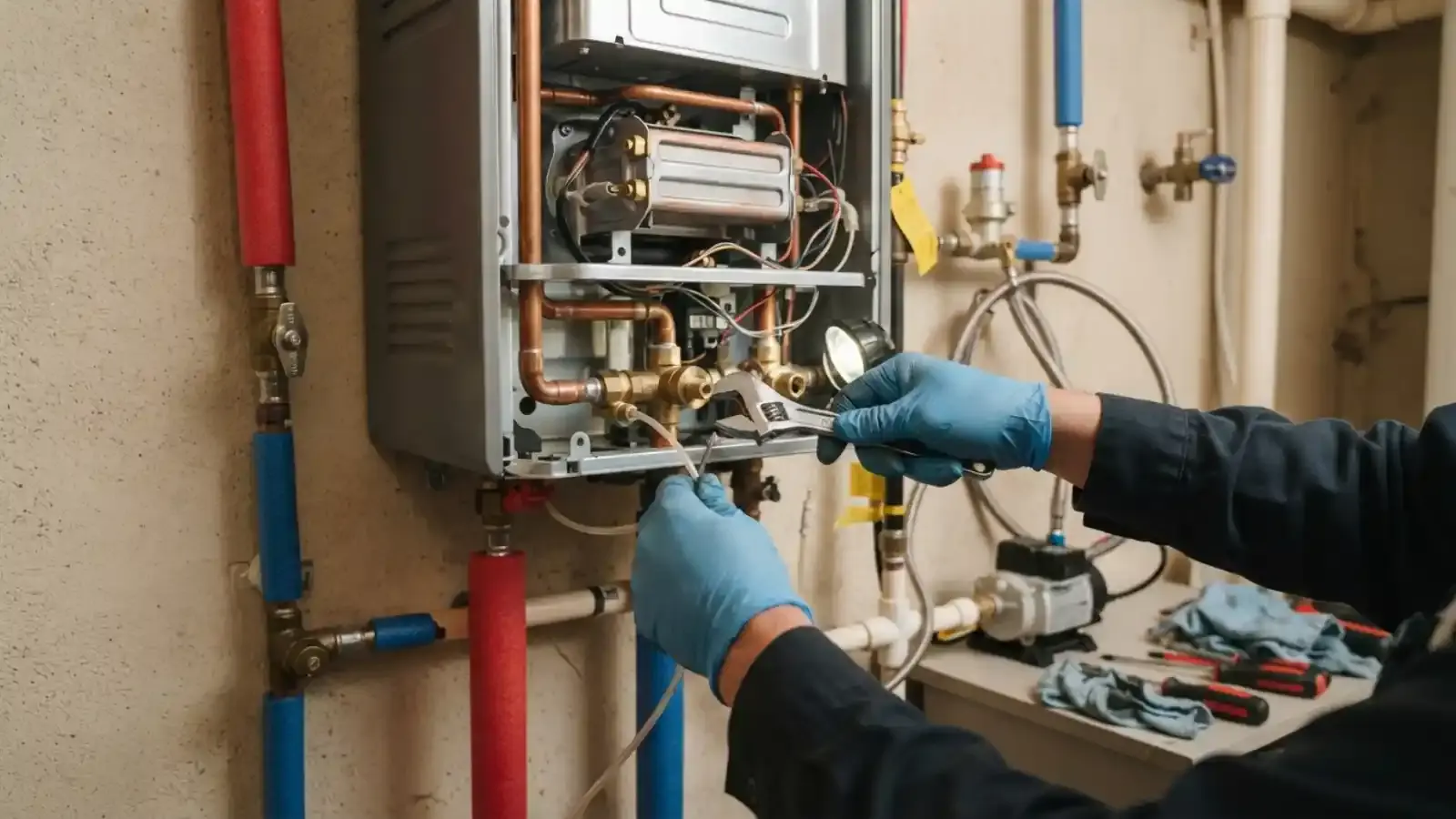
A planned water heater installation is a chance to do it right. You pick the unit, we confirm that it fits the space and the utilities, and the work is scheduled instead of rushed. Whether it is a new home, a remodel or a swap for an aging tank, call (860) 397-8103 to talk through the options. If the old unit is already leaking, see water heater replacement for urgent service.
Good installation takes care of details that nobody sees. The best test is that you never think about the heater again.
Choose fuel and type first
| Type | Good for | Watch for |
|---|---|---|
| Gas tank | Homes with gas service, fast recovery | Needs venting, combustion air and a gas line |
| Electric tank | Homes without gas, simple installation | Higher running cost, needs correct breaker and wire |
| Hybrid heat pump | Lowering electric use in a suitable space | Needs clearance, airflow and a condensate drain |
| Tankless | Space saving, continuous hot water | Gas line size, venting and flow requirements |
Our tankless page covers that choice in more depth.
Installation details that last
A proper install includes shutoff valves on the supply lines, a temperature and pressure relief valve with a discharge pipe that runs to a safe location, and a drain pan where a leak could do damage. In a closed system with a backflow device or pressure-reducing valve, an expansion tank prevents pressure spikes when the water heats up.
We size the unit to your household. A heater that is too small runs out of hot water, and one that is too large wastes energy. We ask about showers, tubs, laundry and dishwashers, and recommend capacity from there.
Comparing options? Call and a plumber will walk through them with you.
Call (860) 397-8103Venting and combustion safety
Gas and oil appliances need venting that carries exhaust outside. The pipe must be the right size, slope upward, and seal at every joint. A direct vent or power vent unit offers more placement choices than an atmospheric vent. We check for backdrafting, since a heater that pulls exhaust into the room can release carbon monoxide.
Install a carbon monoxide alarm near the sleeping areas if you do not have one. Gas work is for a licensed professional. Permit requirements vary, so ask the Windsor building department what applies to your project.
Installation in Windsor homes
Utility rooms differ widely from one Windsor house to the next. Basements near flood-prone streets benefit from raising the unit on a stand, and a heater in a garage needs protection from vehicles and from freezing temperatures.
Because Windsor is an MDC member town, your water pressure comes from the utility's system. Check the pressure at an outdoor spigot with a gauge if you have not. High pressure shortens the life of a heater and every fixture, and a regulator is inexpensive insurance.
Replacing an old unit with a new one
Swapping like for like is easy. Changing fuel, size or location takes planning. If you plan to move from a tank to a tankless unit, we check the gas line, venting and electrical supply before you buy. If you plan to add a recirculation loop, we cover placement and controls.
Questions about hot water in the whole house, such as pressure or temperature at distant fixtures? Piping layout matters, and repiping or plumbing installation may be part of the answer.
Getting ready for installation day
Clear a path to the heater and a few feet of space around it. Know where the gas shutoff, water shutoff and breaker are. If the heater is in a basement, tell us about stairs and tight turns, so we can plan how to move the unit.
Plan for the water and hot water to be off for part of the day. Ask us to explain the new controls and the shutoff valves before we leave. Keep the manual and warranty card together, and write the install date on the tank.
Which code applies to a new heater
A first-time installation can touch venting, gas piping and the relief discharge. Connecticut's State Building Code uses the International Plumbing Code (IPC) as its plumbing standard. The 2022 state code adopts the 2021 IPC, and the state is working on a newer edition. Ask the Windsor building department which edition and permit rules apply before work starts. Source: Connecticut Office of the State Building Inspector.
Frequently asked questions
A standard tank swap is often a half-day job. Fuel changes, new venting or relocated units take longer. We explain the schedule before we start.
Permit rules vary, so ask the Windsor building department what applies. We install to code and can tell you what an inspector expects.
It depends on the number of people, fixtures and peak use. A family with several showers in the morning needs more capacity than a couple.
Yes, where the system calls for one. Closed systems can see pressure spikes as water heats, and an expansion tank absorbs them.
Yes. We drain, disconnect and haul away the old heater.
Yes. See our South Windsor and Bloomfield pages for those areas.
Need a plumber for this right now? The line is answered around the clock.
Call (860) 397-8103