New plumbing work starts on paper. Where do the supply lines run, where does the drain go and how does the fixture vent? A bathroom addition, a kitchen island sink or a laundry room move all need answers before demolition. Call (860) 397-8103 and talk through your plan with a plumber.
We do the plumbing, and we coordinate with your carpenter, tile setter and electrician by explaining what we need and when. If a leak or burst pipe interrupts the project, our 24/7 line is available.
What we install
| Project | What it includes | Things to decide |
|---|---|---|
| Bathroom addition | Supply, drain, vent, toilet, sink, shower or tub | Location of the drain and vent stack |
| Kitchen sink or island | Supply, drain, vent, dishwasher, disposal | Island venting and air gap or loop |
| Laundry hookup | Supply valves, standpipe, drain and vent | Floor drain, location and noise |
| Shower or tub change-out | Valve, drain, trim and rough adjustments | Valve depth and wall framing |
| Outdoor spigot or utility sink | Frost-proof sillcock, supply and drain | Freeze protection and shutoff |
| Shutoff and pressure valves | Main shutoff, regulator, fixture stops | Where to put the main shutoff |
Rough-in, then finish
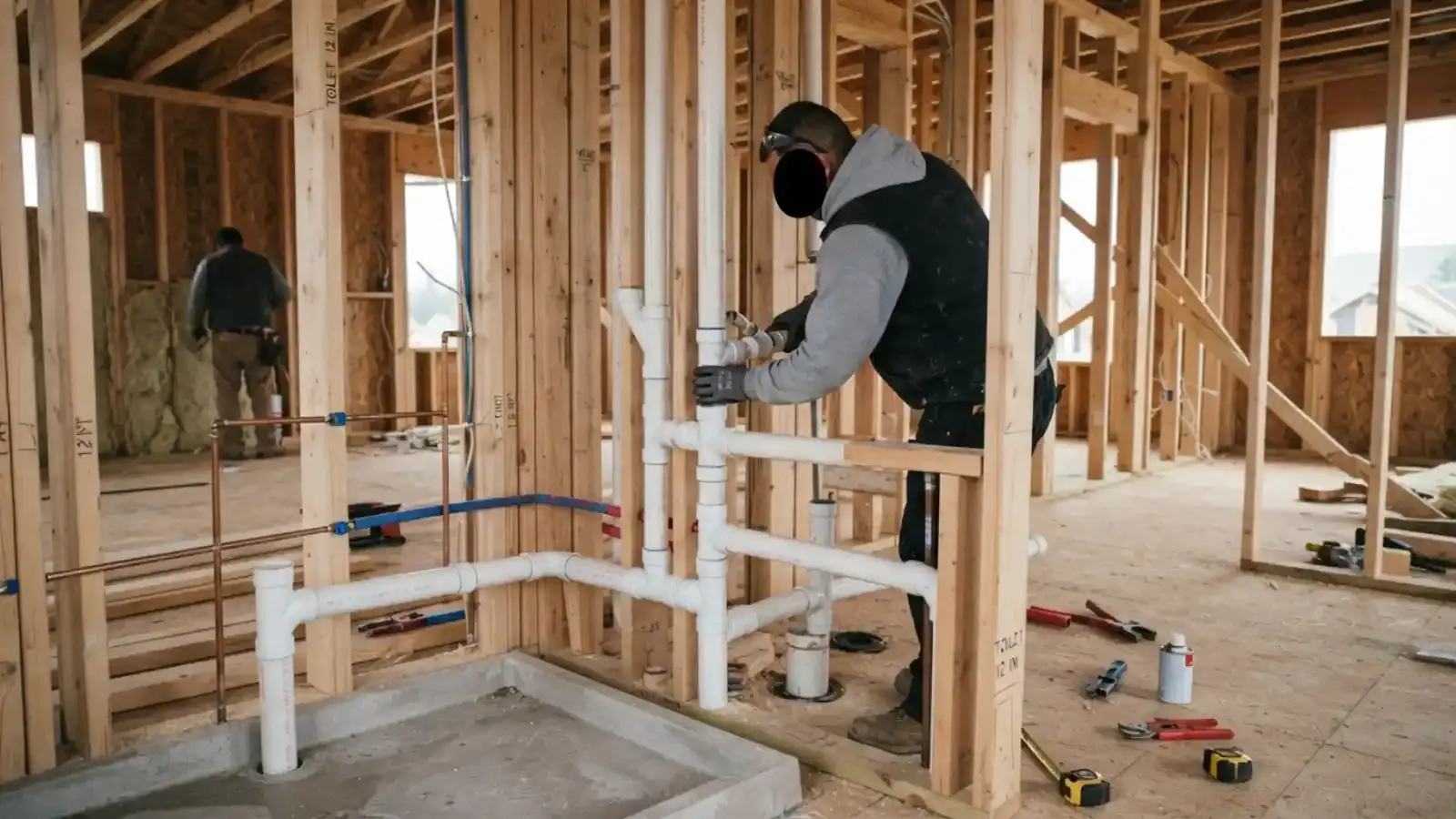
Plumbing work comes in two stages. The rough-in is everything inside the walls and under the floor, including supply lines, drains and vents. After inspection, the walls close, and the finish stage sets fixtures and connects trim. If rough-in is wrong, everything built on top of it has to be reopened.
We measure fixture locations, check framing for notches and plan for access. Tubs and showers need a clear path for the drain, and kitchen islands need vent strategies since a standard wall vent is not available.
Remodel on the calendar? Call and get the plumbing plan right first.
Call (860) 397-8103Venting and drainage
Every fixture drain needs air to flow. A vent line lets air into the system and carries sewer gases out through the roof. Poor venting causes gurgling, slow drains and trap siphoning. We design the venting to code and explain it in plain terms.
Basement bathrooms often sit below the sewer line, so they need an ejector pump or an up-flush system. Those have their own maintenance needs, and we tell you what they involve before you commit.
Permits, inspections and Windsor rules
Plumbing work usually requires a permit and an inspection. Rules vary by job and by town, so ask the Windsor building department what applies. Gas piping and some other work can require a licensed professional. Whoever you hire, you can verify a Connecticut plumbing license on the state's eLicense lookup, run by the Department of Consumer Protection at elicense.ct.gov.
Windsor limits new structures in 100-year floodplains, so additions near the Farmington River or a brook may face extra rules. Plan early if your lot sits near water.
Water softeners, filters and gas piping
Water treatment equipment connects to the same supply lines we install. Softeners, filters and conditioners need a drain, a bypass and an electrical outlet. We do not assume what your water needs. Test your tap, ask your water utility for its annual water quality report and choose equipment from the results.
Gas piping is safety work. If you smell gas, leave the building and call the gas utility or 911 before anyone else. A licensed professional should install or alter gas lines, and permits are typically required, so ask the Windsor building department what applies.
Related work
Water heater swaps are covered in water heater installation. If an install uncovers corroded supply lines, repiping can be added while the walls are open. Disposal and sink upgrades are on our garbage disposal and faucet pages.
Code basics for new plumbing work
New fixtures, lines and drains follow a published standard. Connecticut's State Building Code uses the International Plumbing Code (IPC) as its plumbing standard. The 2022 state code adopts the 2021 IPC, and the state is working on a newer edition. Ask the Windsor building department which permit your project needs. Source: Connecticut Office of the State Building Inspector.
Frequently asked questions
Planned installs are scheduled in advance. If an install goes wrong or a leak starts, call (860) 397-8103 any hour. The line is answered 24/7, and same-day appointments are offered when available.
Usually, yes. Ask the Windsor building department what applies to your project. We can tell you what an inspector will look for.
Often yes. It depends on where the sewer line is relative to the floor. If it is higher than the drain you need, we use an ejector pump.
Use the Department of Consumer Protection's eLicense lookup. Search by name or license number and check the credential status.
We tell your contractor what we need and when, and we show up for the inspection stage so the schedule does not stall.
Yes. See our pages for East Hartford and South Windsor.
Need a plumber for this right now? The line is answered around the clock.
Call (860) 397-8103