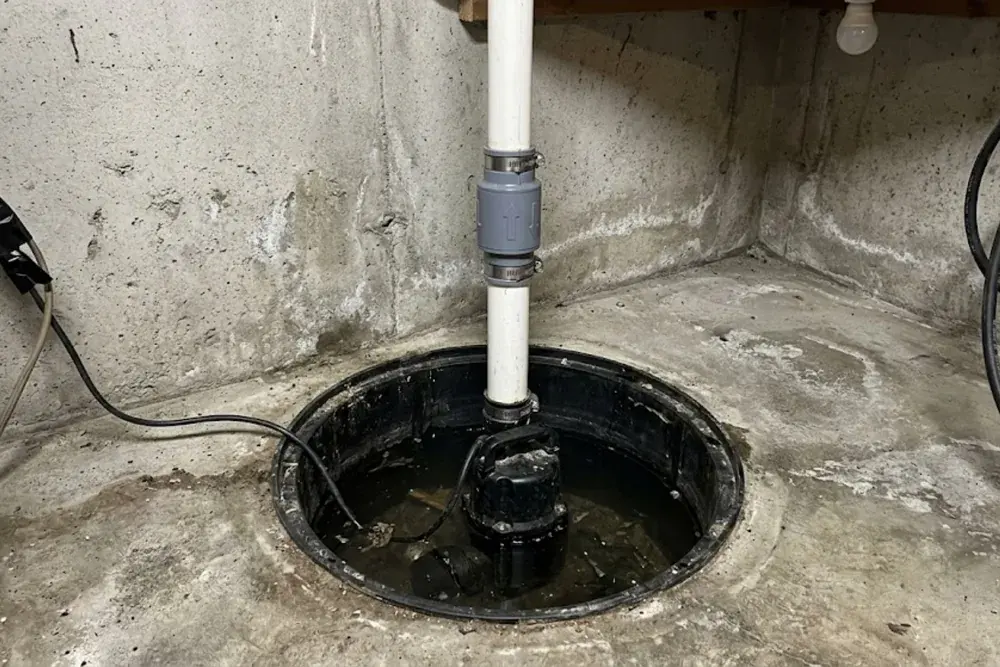
A sump pump fails at the worst time, usually in the middle of a storm. If the pit is filling and the pump is silent, unplug it, plug it into a different outlet and check the float. If it still does not run, call (860) 397-8103. We answer 24/7, and same-day appointments are offered when available. In the meantime, move stored items off the floor and keep electronics away from wet outlets.
Most failed pumps die from a stuck float, a clogged intake, a burned-out motor or a dead check valve. All four are fixable, and the right call depends on the pump's age and how much the basement matters to you.
When a sump pump failure is an emergency
Once water reaches the lower stair treads, it is an emergency. Water that sits near a furnace, water heater or electrical panel needs attention right away. Do not step into standing water if the panel or outlets are submerged, and call the electric utility if you cannot reach the breaker safely.
In slower failures, the pump runs constantly and never catches up, or it cycles every few seconds. Both mean something is wrong, and both are better caught in dry weather.
Why Windsor basements need a working pump
Windsor sits between two rivers and holds several brooks, including Mill, Meadow, Deckers, Phelps and Rainbow. The town's hazard planning documents cite flooding events in 1984, 2003 and 2005 along the Mill, Meadow and Deckers Brook watersheds, and Windsor restricts new structures in 100-year floodplains. A high water table follows wet seasons, and basements in low areas feel it first.
Windsor's flood-prone roads in those documents include Batchelder Road, Pleasant Street and River Street. If you live near them, a reliable pump and a battery backup are not luxuries.
Pit filling and pump not running? Call before the water rises.
Call (860) 397-8103Pump types and what each is good for
| Type | Strength | Limitation |
|---|---|---|
| Submersible | Quiet, sits in the pit, handles heavy flow | Harder to service, shorter lifespan if it cycles constantly |
| Pedestal | Motor above the pit, easier to access | Louder and less powerful |
| Battery backup | Runs when power fails during storms | Battery needs checking, runtime has limits |
| Water-powered backup | Uses household water pressure, no battery | Requires municipal pressure and a compatible setup |
Installation details that matter
A good install is more than dropping a pump in a hole. The pit needs a solid base so the pump does not suck debris. The discharge line needs a check valve to prevent backflow, and it should run to a point that drains away from the foundation and does not freeze shut. The line must not tie into sanitary sewer drains, which is a code issue in many places.
Ask the Windsor building department what permits or electrical work apply. A pump on its own circuit and a GFCI outlet are normal safety steps, and a licensed electrician may need to do part of that work.
Backups and alarms
Power outages come with storms, which is exactly when a pump matters most. A battery backup keeps the pit empty for hours, depending on the battery and inflow. A high-water alarm tells you when something is wrong even if you are upstairs or away. Both are small additions compared with the cost of a ruined basement.
If the pit is not the real problem, we will say so. Persistent seepage along the walls may point to basement waterproofing, and a pit that fills with clear water on a dry day deserves leak detection first.
Code and discharge rules for sump pumps
Where a pump discharges and how it is piped matter. Connecticut's State Building Code uses the International Plumbing Code (IPC) as its plumbing standard. The 2022 state code adopts the 2021 IPC, and the state is working on a newer edition. Ask the Windsor building department about discharge rules, and call 811 before digging a discharge line. Source: Connecticut Office of the State Building Inspector.
Where Windsor homeowners ask about this
Sump pump questions come up near brooks and rivers. In Wilson, Deckers Brook is part of the local flood history. Near the Farmington River, see Poquonock.
Frequently asked questions
Yes. The line is answered 24/7. Call (860) 397-8103, describe what the pit is doing, and we will arrange emergency service. Same-day appointments are offered when available.
Many last roughly seven to ten years, though heavy use shortens that. A pump that cycles often or makes new noises is worth replacing before the season hits.
Often yes. A backup pump sits beside or above the primary and has its own switch and battery. We check pit size and discharge routing before recommending a setup.
It should carry water well away from the foundation to a spot that drains and will not freeze closed. It should not connect to a sanitary sewer line. Ask the town what local rules apply.
Water damage from a pump failure is often excluded unless you carry specific water backup coverage. Ask your agent, and keep records of any work.
Yes. We cover all of Windsor, plus Bloomfield, Windsor Locks, South Windsor, East Granby and East Hartford.
Need a plumber for this right now? The line is answered around the clock.
Call (860) 397-8103