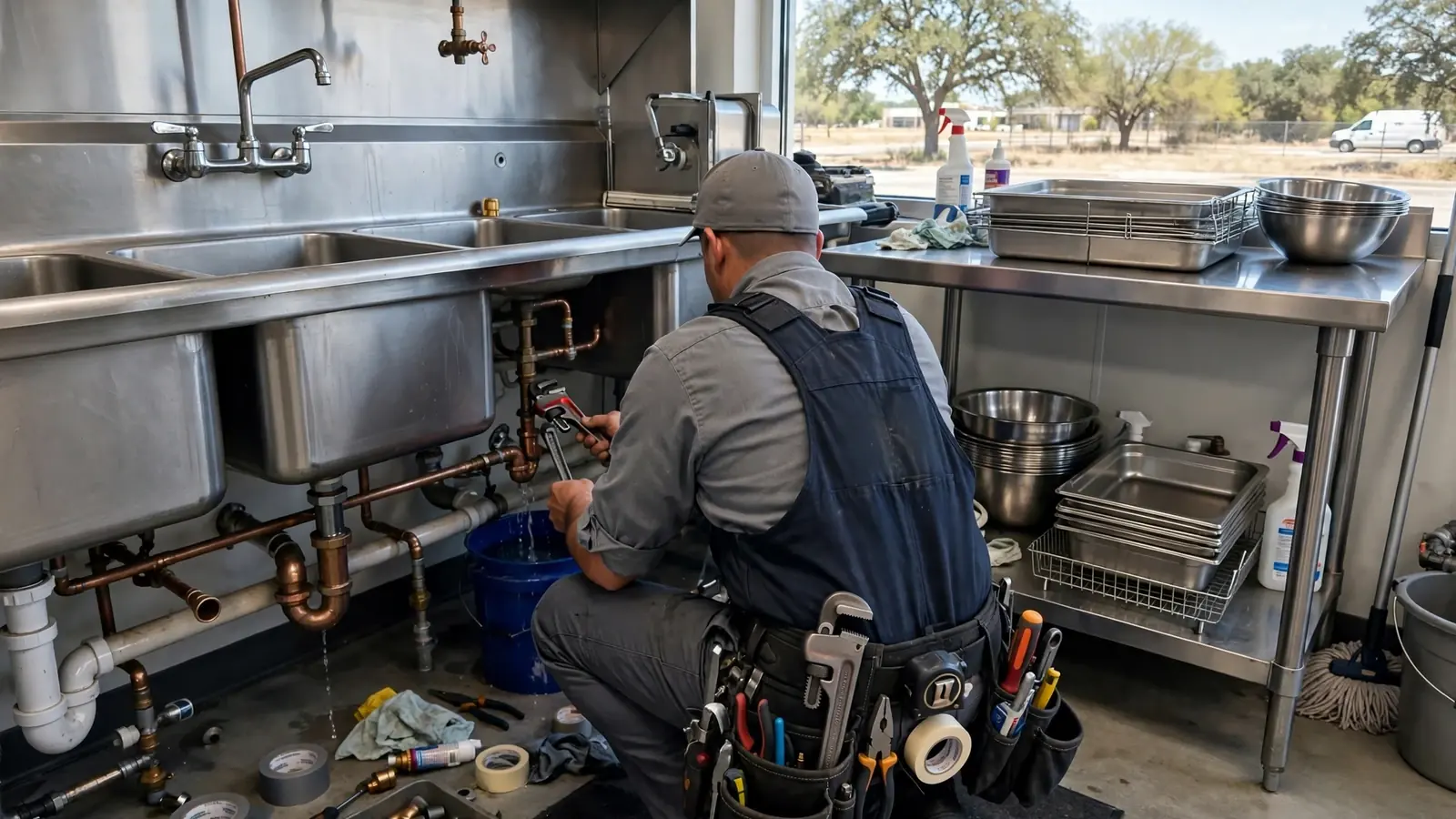
A plumbing failure in a business is a cost every hour. A backed-up kitchen line, a burst pipe in a stockroom or a failed water heater in a salon cannot wait for a weekday slot. Call (860) 397-8103 and tell us the type of building and the problem. The line is answered 24/7, and same-day appointments are offered when available.
Commercial work differs from residential in scale and in rules. Larger pipes, multiple fixtures, shared systems and code requirements shape how we plan and fix each job.
Emergencies that stop a business
The common emergencies are sewer backups, burst supply lines, failed water heaters, overflowing grease interceptors and flooded floors. If sewage is backing up, stop using the restrooms and drains and keep customers out of the affected area. If a supply line has burst, close the main shutoff or the zone valve.
Contact your landlord or property manager if you lease. Responsibility for plumbing differs from lease to lease, and we can document what we find for them.
Building types we handle
- Restaurants and food service Grease lines, floor drains, dishwashers, hand sinks and water heaters.
- Offices and corporate sites Restrooms, break rooms, water coolers and mechanical room plumbing.
- Retail and salons Shampoo bowls, mop sinks, restrooms and water heaters.
- Industrial and warehouse Floor drains, process lines, restrooms and hose bibs.
- Multi-unit residential Stacks, shared lines, water heaters and common-area plumbing.
Business down because of plumbing? Call the 24/7 line.
Call (860) 397-8103Grease traps and interceptors
Kitchens produce grease that cools and solidifies in drain lines. A grease trap or interceptor captures it before it reaches the sewer. When the trap is full, grease passes through and clogs the line or causes odors. Regular cleaning keeps the trap working, and your local sewer authority may have requirements about frequency and records.
We clean traps on a schedule that fits your volume, and we jet the downstream lines when buildup requires it. See hydro jetting for how we clear heavy grease.
Backflow prevention and testing
A backflow preventer keeps contaminated water from flowing back into the public supply. Many commercial buildings need one on fire lines, irrigation and process equipment, and most require periodic testing by a certified tester. Rules vary by utility and building type, so ask your water provider what applies to your property.
Windsor's water provider is the MDC. If you are not sure whether your building has a backflow device or when it was last tested, call us and we will help you find out.
Storm drains and floor drains
Parking lots and loading docks drain through catch basins that collect leaves, silt and trash. When they clog, water ponds and can enter the building. We clean catch basins and trench drains, and we jet the lines. Floor drains inside warehouses and kitchens need regular attention too.
Windsor's Day Hill Road corridor is a corporate and industrial office area. If you manage a property there, a seasonal drain check before fall rains is easy to schedule.
Planned work and service plans
We handle remodels, fixture changes and water heater replacement in commercial buildings. See plumbing installation and water heater replacement. For ongoing needs, ask about scheduled inspections and cleaning, so problems get caught during business hours instead of at night.
Keeping records and avoiding repeat calls
A business that logs its plumbing events sees patterns. Note the date, location and cause of each backup or leak, and who handled it. After two or three entries, a line that keeps clogging stands out, and the conversation shifts from emergency cleaning to a lasting fix.
Ask for a camera record of lateral and floor drain lines in older buildings, and a map of shutoff valves for each floor or suite. Share both with your staff or property manager, so the person on duty at night knows what to close.
The standard commercial work follows
Commercial plumbing carries added requirements for backflow, fixture counts and access. Connecticut's State Building Code uses the International Plumbing Code (IPC) as its plumbing standard. The 2022 state code adopts the 2021 IPC, and the state is working on a newer edition. Ask the Windsor building department which edition and permits apply to your building. Source: Connecticut Office of the State Building Inspector.
What to do while you wait for a plumber
Close the nearest shutoff, and the building main if water is spreading. Move people away from wet floors and anything electrical. Do not use a toilet that is backing up, and do not mix cleaning chemicals to clear a drain. Note the time the problem began and which fixtures are affected.
If sewage is present, keep staff and customers out of the area. If you smell gas, leave and call 911. Photograph the damage for your insurer, and keep your tenant or landlord informed. When to call 911 instead of a plumber: gas smell, a person in danger or water touching live electrical equipment.
Frequently asked questions
Yes. The line is answered 24/7. Call (860) 397-8103 with your address and the problem. Same-day appointments are offered when available.
Yes. We clean traps and interceptors on a schedule and can jet the downstream line if buildup is heavy.
A certified tester checks that a backflow preventer works and records the result. Ask your water provider what applies to your building.
For planned jobs, yes. We schedule early, late or weekend work when that makes sense.
Yes. We clean and jet storm drains, catch basins and trench drains for commercial properties.
Yes. See our pages for Bloomfield and East Hartford.
Need a plumber for this right now? The line is answered around the clock.
Call (860) 397-8103