A toilet that does not clear after a few plunges has a clog deeper in the line. The trap is the curved passage built into the toilet. A clog past it, in the drain beneath the floor, is out of reach for a plunger. Here are the steps that work and the signs that say stop.
Step one: stop the water
Do not flush again. If the bowl is high, lift the tank lid and push the flapper down, or turn the valve behind the toilet clockwise. Put towels around the base. Check whether other fixtures are affected. A tub that gurgles or a sink that drains slowly nearby points to a clog in a shared line, not only the toilet.
Step two: use the right tool
| Tool | Use | Tip |
|---|---|---|
| Flange plunger | Pushes and pulls the clog in the trap | Make a full seal and use steady strokes |
| Toilet auger | Reaches deeper than a plunger | Crank slowly and avoid scratching porcelain |
| Wet and dry vacuum | Pulls out blockages in some cases | Seal the opening and be careful with sewage |
| Hand snake | Not suited to toilets | Can damage the bowl |
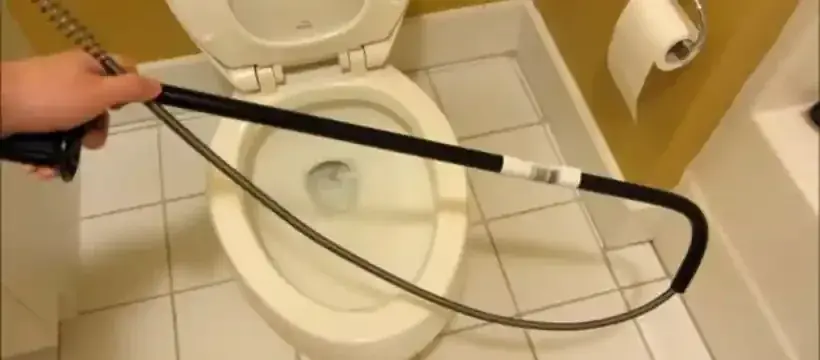
A toilet auger has a protective sleeve and a curved end designed for the toilet's shape. Feed it in, crank gently and feel for the clog. Pull it back and flush. If the auger meets a firm obstruction or reaches its length without clearing, stop.
Auger not helping? Call and a plumber will take it from here.
Call (860) 397-8103Signs the problem is the main line
Stop trying and call if
- More than one fixture is affected The tub or floor drain gurgles when you flush.
- Water rises in another fixture It means the shared drain is blocked.
- The problem recurs The same toilet clogs again within days.
- Sewage appears at the lowest drain The main line may be full.
- The clog came after a foreign object Toys and wipes can lodge deep.
In those cases, see drain cleaning and sewer line cleaning.
Old pipes, new habits in Windsor homes
Windsor is an MDC member town, and a toilet drains through the house line to a lateral and then the MDC sewer. If you have a recurring clog, the lateral is worth a camera look. Older homes and mature trees raise the odds of roots and scale. Heavy rain can also stress sewers, and the town's hazard documents note flood-prone areas, so backups during storms deserve a different diagnosis.
Toilets are not trash cans. Wipes labeled flushable do not break down like paper, and they are a leading cause of deep clogs. Keep a small bin in the bathroom.
Source type: MDC member-town information and the Capitol Region Council of Governments hazard mitigation plan annex for Windsor.
Do not use chemicals
Chemical drain openers can damage the toilet's finish and your pipes, and they leave a caustic liquid in the bowl. If they do not work, you now have a hazardous problem to clear. We advise against them. A plunger and a toilet auger are safer.
If you have already used a chemical, tell the plumber. It changes how we handle the job.
When to replace the toilet
A toilet that clogs often even with a clear drain may be a poor design or have clogged rim jets. A plumber can check and, if needed, replace it. Our toilet repair and installation page covers both.
We help with deep clogs in East Hartford, Bloomfield and across Windsor.
What not to flush
Most deep clogs come from too much paper, a toy or a hygiene product that lodged past the trap. Before you start, check the bowl water level. If it is rising, stop flushing and keep the lid down. A low or steady level means you have time to use an auger without making a mess.
Flush toilet paper and human waste. Skip wipes, even those marked flushable, along with paper towels, feminine products, cotton swabs, dental floss and cat litter. These items do not break down in time, and they collect on rough spots in the pipe and snag more waste behind them.
If children use the bathroom, keep a covered bin close by and explain the rule. A small rule saves a large repair. If a toilet clogs repeatedly without any of these items, ask a plumber to check the toilet and the line.
Using a toilet auger step by step
Pull the auger's handle back so the cable retracts. Place the curved end in the bowl opening and push it gently into the trap. Turn the handle clockwise while you push the cable forward, and feel for resistance. When you feel the clog, keep turning to break it up or hook it, then pull the auger out slowly.
Flush once to test. If the water drains normally, flush a few more times to confirm. Rinse the auger and let it dry. If you meet a solid obstruction that will not move, stop and call a plumber rather than forcing the cable.
Frequently asked questions
The clog may be beyond the trap, or the plunger may not be sealing. A toilet auger reaches deeper.
A toilet auger is safer. A standard snake can scratch or crack the bowl.
Other fixtures gurgle or back up when you flush.
They do not break down like toilet paper and cause many deep clogs.
No. Chemicals can harm fixtures and pipes and make later work hazardous.
Plumbing problem that cannot wait? Call the 24/7 line.
Call (860) 397-8103